What is square dancing?
Square dancing is a social folk dance in which four couples move together through patterns directed by a caller. You learn the calls and respond to them as a group; there’s no need to memorize a routine.
NEW TO THE DANCE FLOOR?
Everything you wanted to know about dancing with us! Whether you're curious about your first lesson or returning after some time away, here's what to expect from square and line dancing.
Find an Upcoming Dance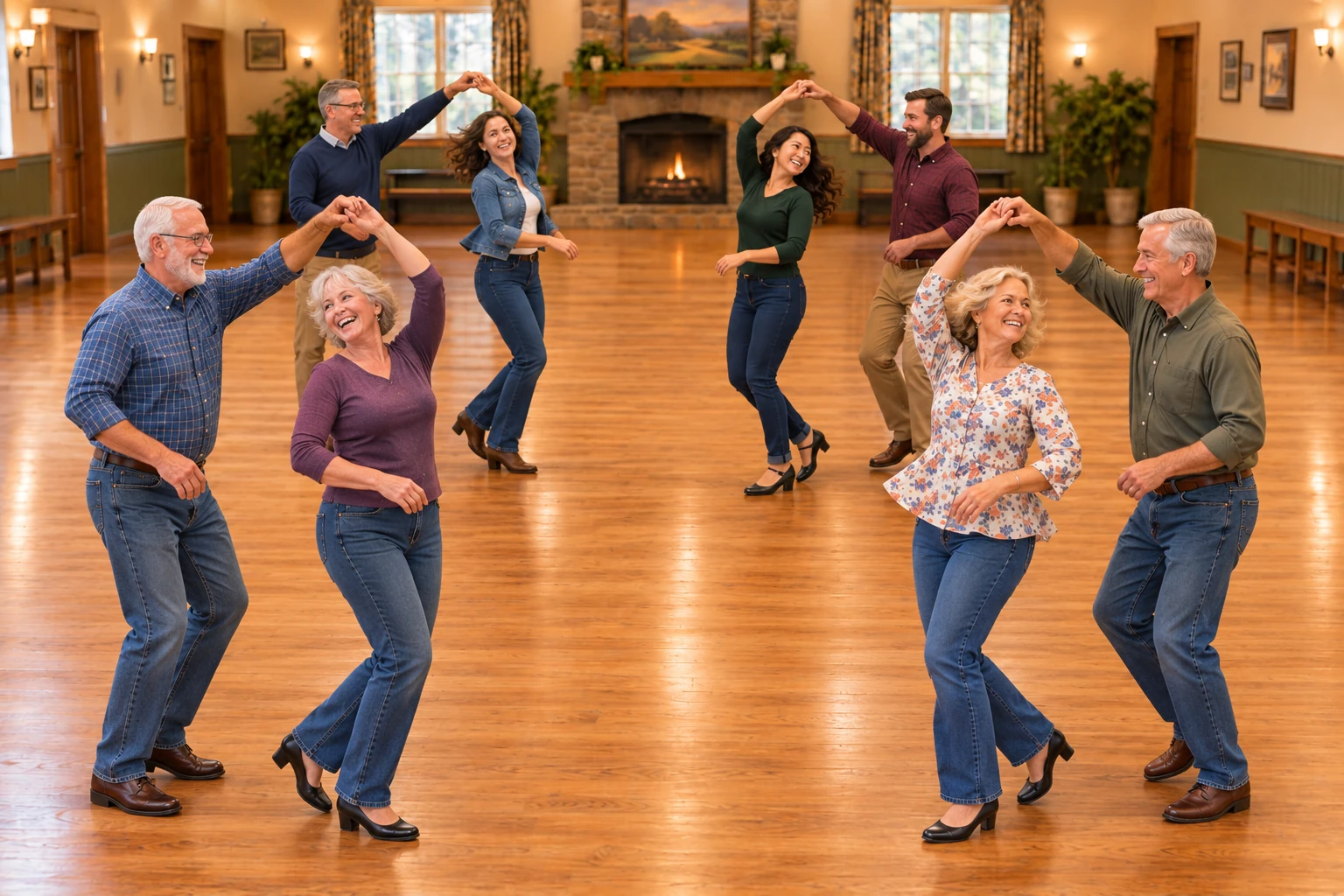
Square dancing is a social folk dance in which four couples move together through patterns directed by a caller. You learn the calls and respond to them as a group; there’s no need to memorize a routine.
Line dancing uses choreographed steps performed individually in rows, often guided by an instructor. There are dances for beginners and more experienced dancers, and some routines involve a partner.
Not necessarily. Many clubs welcome people attending on their own, and dancers often rotate partners or help fill squares. Check with the club about its current beginner classes and arrangements.
Yes! Dancing in a welcoming social club offers a much wider variety of calls, music, and levels than a short school introduction.
Comfortable clothing and shoes that allow you to move easily are a great start. Traditional square dance outfits are welcome but generally not required for beginners; confirm any special event dress guidelines with the host club.
Square and line dancing combine movement with listening, memory, and teamwork. You can enjoy a comfortable pace or add energy as your confidence grows.
It is not all country music. Modern square dancers enjoy a variety of styles with a steady beat, including popular music, familiar standards, and more.
Prices vary by club, lesson, and special event. Visit the Dance Calendar or contact the hosting club for current admission and class costs.
Absolutely. Beginner classes introduce calls step by step. You don’t have to be an expert dancer to begin.
Browse the VASD Dance Calendar and club pages for current schedules, class announcements, locations, and contact information.
No. Square dancing welcomes people of different ages and experience levels. School groups, families, and longtime dancers all contribute to the fun.
Square dancing is about listening to calls and working together. You learn each pattern through practice—not perfect footwork.
Modern callers use music from many genres, as long as it has a strong beat.
It's a community activity enjoyed by students, adults, and older dancers alike.